
You want cleaner air in a busy urban home, and the right purifier makes a real difference with verified CADR, multi-stage filtration, and smart features. From compact deskside units to high-capacity models, you’ll find real-time AQI, auto and sleep modes, and easy filter care. Ready to weigh noise, energy use, and certification claims to pick the best fit, while the next section breaks down what each option offers. Let’s map out your best match.
Key Points
- Prioritize models with verified CADR for Smoke, Dust, and Pollen to handle urban pollutants and fine particulates.
- Look for true HEPA (H13) or equivalent filtration plus activated carbon for odor and VOC removal.
- Consider large-room coverage and high CADR to sustain air changes in open-city layouts.
- Favor units with real-time monitoring (AQI/LED) and app control for proactive maintenance.
- Check low-noise modes (Sleep/Quiet) and reasonable wattage for 24/7 urban use.
LEVOIT Vital 200S-P HEPA Air Purifier White
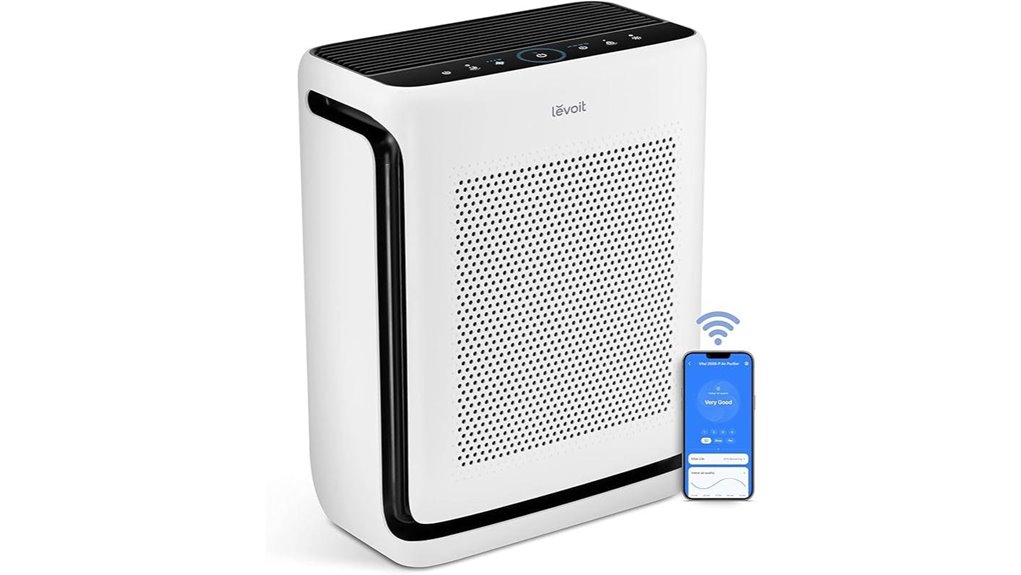
The LEVOIT Essential 200S-P HEPA Air Purifier White stands out for large-room efficiency, delivering AHAM-verified performance up to 1875 sq ft with a 3-stage filtration that traps 0.1–0.3 μm particles at 99.97%—ideal if you need strong allergen control in open living spaces. You get AHAM VERIFIDE certification, trusted lab testing, and CADR ratings: Smoke 250 CFM, Dust 254 CFM, Pollen 289 CFM, confirming solid air-cleaning performance. Designed for allergens and space, it targets pollen, pet hair, dander, and dust across rooms up to 1875 sq ft. Auto Mode, VeSync app, and washable pre-filter streamline control and maintenance.
Best For: Large living spaces and allergy sufferers who want AHAM-verified performance and strong filtration in open-concept homes.
Pros:
- AHAM VERIFIDE certification and independently tested CADR ratings for Smoke, Dust, and Pollen.
- 3-stage filtration with 0.1–0.3 μm particle capture at 99.97% efficiency and a washable pre-filter.
- Large-room capability up to 1875 sq ft, with auto mode, VeSync app control, and quiet operation (27 dB).
Cons:
- Bulkier footprint (19.8″ H, 8.5″ W, 13.2 lb) may be unwieldy for smaller rooms.
- Requires ongoing filter replacements (replacement filters available) for continued performance.
- Some features rely on app connectivity (VeSync) and may require setup to use voice assistant compatibility.
KNKA Air Purifier for Home Large Room APH4000
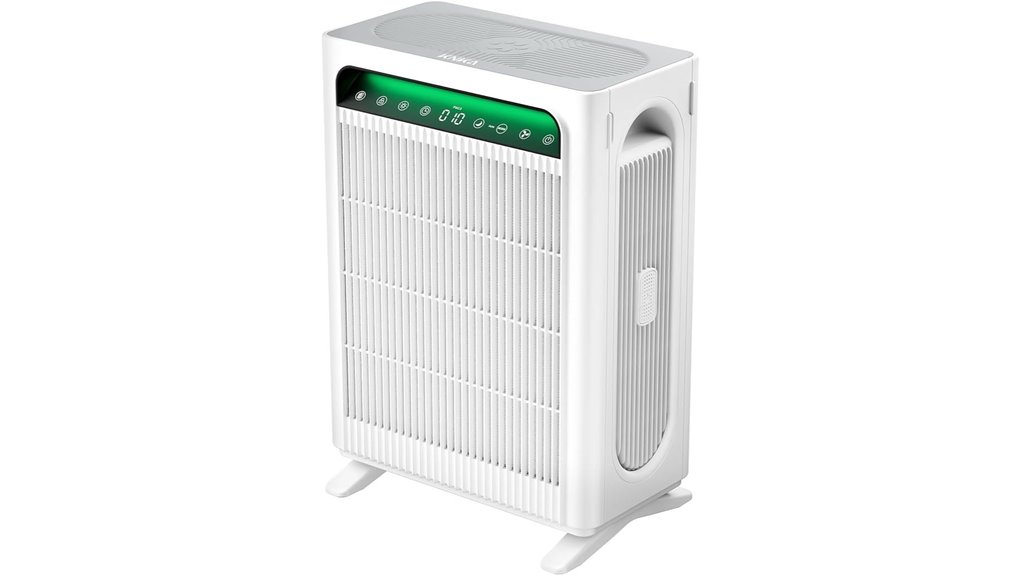
If you’re dealing with city pollution or pets, the KNKA APH4000 is built for large rooms and real-time air monitoring, delivering up to 4.8 full air changes per hour in a 350 sq ft space and a full refresh per hour in larger layouts. It uses dual front-and-back intakes with dual side outlets and a 3-stage filtration: washable pre-filter, True HEPA, and activated carbon. CADR peaks at 226 CFM for smoke/dust/PM2.5 and 244 CFM for pollen. Modes include PET, ECO, Sleep, and Auto with four speeds. Real-time AQI display with color codes, filter indicators, and 3–6 month replacement cadence. Genuine KNKA filters recommended.
Best For: Ideal for large rooms or open layouts in urban environments with pets, needing real-time air quality monitoring and multiple filtration stages.
Pros:
- High CADR for smoke/dust/PM2.5 and pollen, enabling effective air cleaning in sizable spaces
- Real-time AQI display with color-coded indicators for easy monitoring
- Versatile modes (PET, ECO, Sleep, Auto) plus four fan speeds for customized comfort
Cons:
- Larger footprint may be less suitable for small rooms or compact areas
- Replacement filters require purchasing genuine KNKA parts (B0FQNYGVZF, B0GCMV5JGF, B0GCNPGMYM)
- Estimated filter life of 3–6 months could be higher maintenance in dusty or busy households
Coway Airmega AP-1512HH True HEPA Purifier
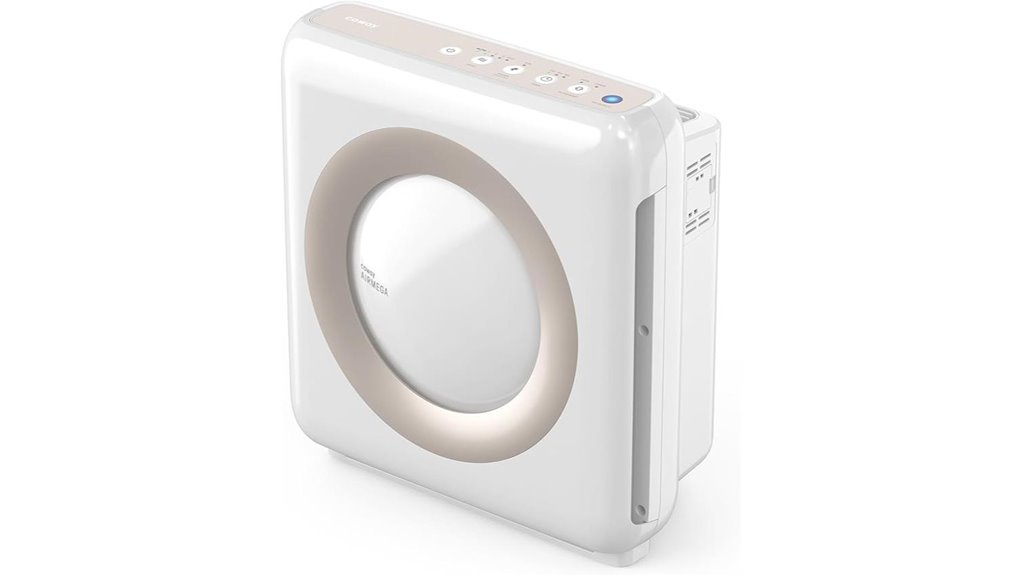
The Coway Airmega AP-1512HH stands out for urban homes with its compact 16.8 x 18.3 x 9.7-inch footprint and true 4-stage filtration, delivering efficient coverage up to 361 sq ft while quietly monitoring air quality in real time. You get a 4-stage setup (Pre-filter, Deodorization, True HEPA, Vital Ion) that captures 99.97% of 0.3-micron particles, plus VOC and odor reduction. Real-time LED air-quality monitoring drives Auto mode (1–3) and Eco mode after 30 minutes of inactivity. It weighs 12.5 pounds, uses 77 watts, and includes a filter indicator, timer options, CARB and ENERGY STAR certifications, and a 3-year motor/electronics warranty.
Best For: Urban homes or small-to-medium rooms up to 361 sq ft that want real-time air quality monitoring and a compact, energy-efficient purifier with a proven 4-stage filtration system.
Pros:
- True 4-stage filtration (Pre-filter, Deodorization, True HEPA, Vital Ion) with 99.97% capture of 0.3 micron particles
- Real-time air-quality monitoring with auto mode (1–3) and energy-saving Eco mode
- Compact size, relatively quiet operation, ENERGY STAR and CARB certified, 3-year motor/electronics warranty
Cons:
- Filter replacement costs can add up over time (filters excluded from warranty)
- Maximum coverage up to 361 sq ft may be less effective in larger or heavily polluted spaces
- Noise varies across modes (24.4 dB to 53.8 dB) and may be noticeable on higher settings
Air Purifier for Large Rooms, 3500 ft², H13 HEPA
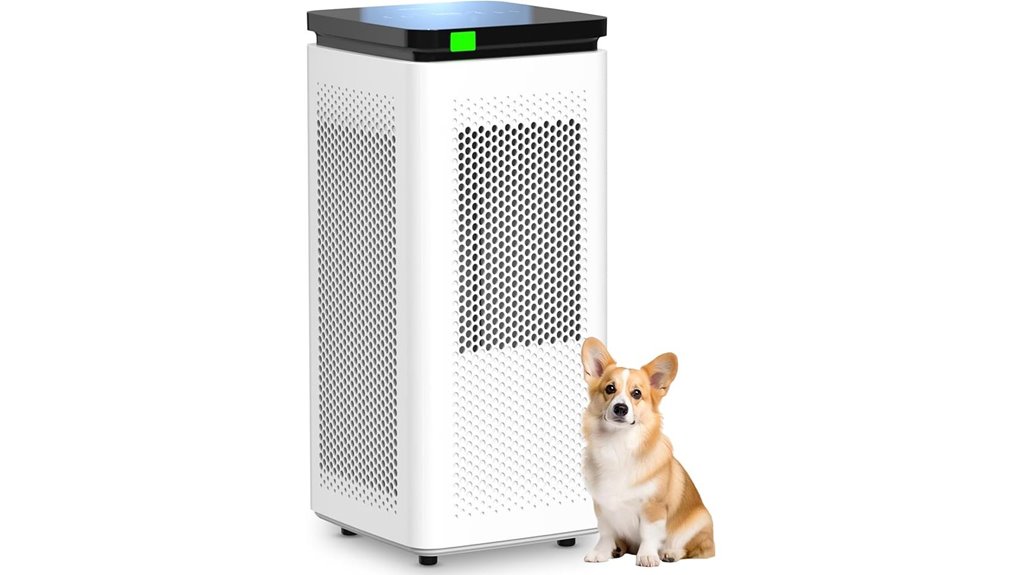
Designed for truly large open spaces, this air purifier packs 235 CFM CADR and 2× faster circulation thanks to dual-inlet airflow, cleaning up to 500 sq.ft in 15 minutes and covering up to 3500 ft². You get H13 True HEPA filtration (0.1 μm, 99.97%) plus activated carbon, capturing dust, pollen, pet dander, hair, cigarette and wildfire smoke, VOCs, odors, and particulates. Sleep Mode at 30 dB with a dimmer keeps bedrooms peaceful, plus Auto Mode adjusts fan speed. Floor-standing with Timer, Child Lock, and dimmer ensures safety and convenience. CARB, DOE, EPA, UL certified for performance and energy efficiency.
Best For: You’ll get best results in truly large open spaces up to 3500 ft² and homes needing quiet, sleep-friendly operation with strong filtration for dust, smoke, VOCs, and odors.
Pros:
- High CADR (235 CFM) and dual-inlet design for faster air turnover
- H13 True HEPA with activated carbon effectively removes particulates, smoke, and odors
- Sleep mode at 30 dB, dimmable panel, and child lock for safe, quiet operation
Cons:
- Large footprint may require substantial floor space
- Higher upfront cost typical of premium large-room purifiers
- May be overkill for smaller rooms or spaces with limited airflow constraints
PuroAir 240 HEPA Air Purifier for Home
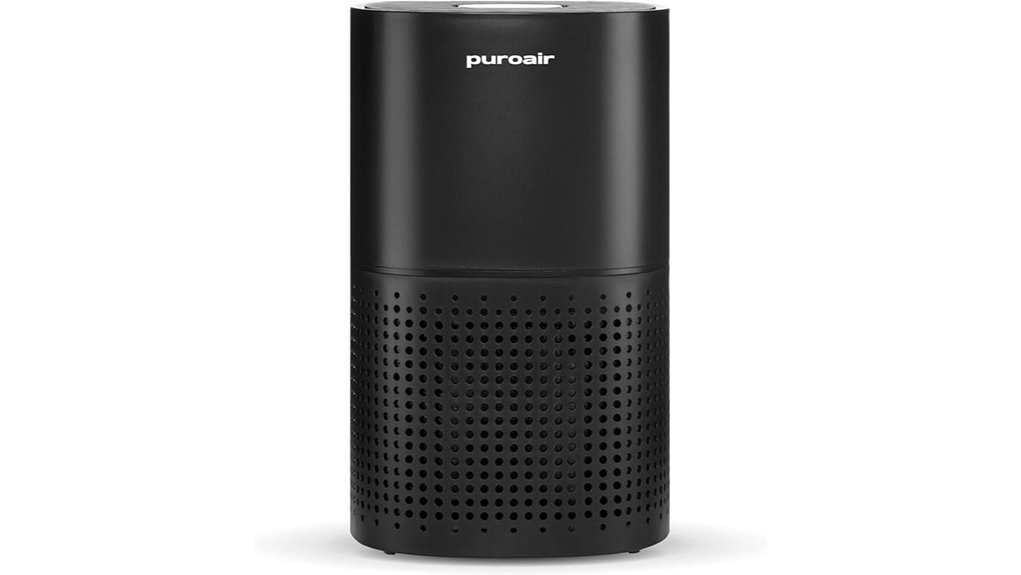
Pros:
- Large-room coverage up to 1,000 sq ft per hour with 99.9% pollutant reduction
- 3-layer filtration (pre-filter, HEPA, activated carbon) targeting dust, pollen, smoke, VOCs
- Smart particle sensor with auto-adjusting power and quiet sleep mode for 24/7 use
Cons:
- Claims are lab-tested and certified, but independent third-party tests may vary by pollutant type
- May be heavier and bulkier than compact purifiers intended for smaller spaces
- 2-year warranty while some competitors offer longer coverage periods
Air Purifier with H13 HEPA, 3 Speeds, 360° Intake
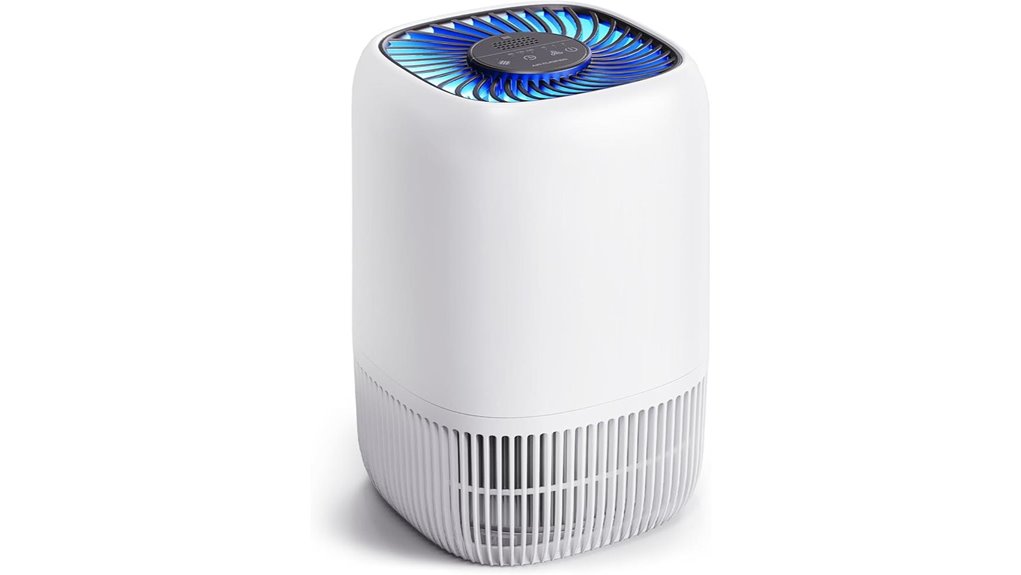
If you’re after compact, low-profile air purification with whole-room coverage, this VOOPNU model stands out: 360° intake and H13 True HEPA filtration tackle pet hair, odors, pollen, and smoke while staying whisper-quiet at 22 dB. The Air Purifier for Home with H13 Quiet HEPA Filter Up to 1076 Ft² uses a 360° airflow design and triple-layer HEPA filtration to capture 99.97% of airborne pollutants. It cleans up to 1,076 ft², with 250 ft² refreshed every 15 minutes. With 3 speeds, a timer, and an aroma tray, it stays quiet, compact, and easy to operate at a desk or corner. Comes with DOE, ETL, and more safety certifications.
Best For: Homeowners or roommates seeking a compact, quiet, whole-room air purifier with 360° intake and H13 filtration for dealing with pet hair, odors, pollen, and smoke in medium to large rooms.
Pros:
- 360° intake with H13 True HEPA filtration captures 99.97% of airborne pollutants
- Quiet operation at 22 dB with compact, lightweight design (6.69″ x 6.69″ x 9.84″, 2.56 lb)
- 3 speeds, timer, aroma tray, and up to 1,076 ft² coverage for versatile use
Cons:
- Best performance requires prolonged or continuous use
- Only 5 W power, which may limit rapid purification in very dusty environments
- Aroma tray adds an extra feature that some users may not need and could require maintenance/removal if not used
AROEVE Air Purifier for Bedroom with Sleep Mode
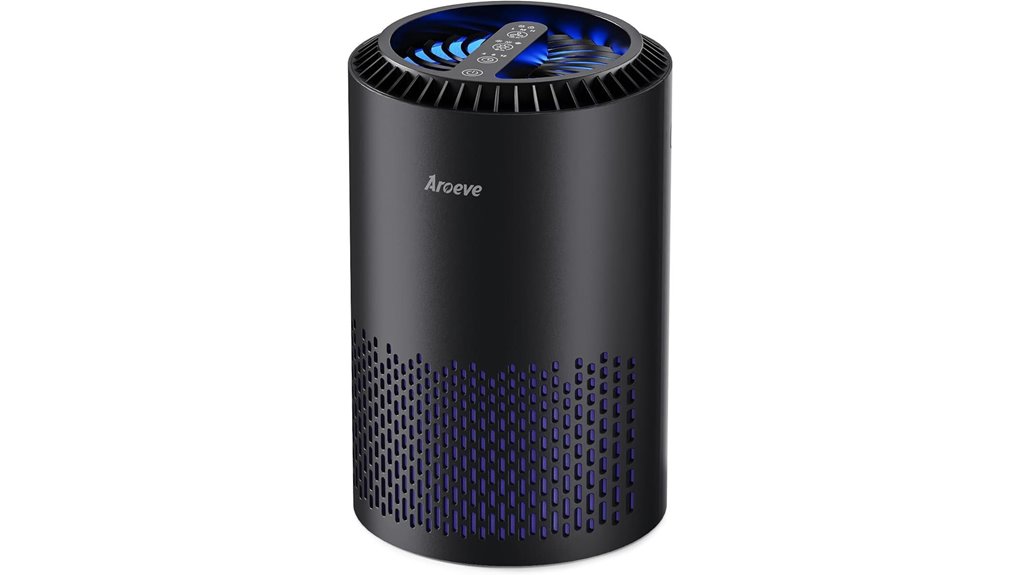
This compact purifier is a smart pick for bedrooms thanks to its Sleep Mode, which keeps noise at a whisper-quiet 22 dB while you rest. The MK01A handles smoke, pollen, dander, hair, and more with HEPA-type filtration, making it ideal for urban air. It delivers 360-degree airflow through dual channels, covering up to 287 ft² (25 m²). Power is a modest 17 watts, and Sleep Mode lowers the fan further for quiet operation. It includes an aroma pad, a red replacement reminder, and simple button control. California availability, ETL Certified, 1-year warranty with lifetime service.
Best For: Bedroom occupants seeking quiet nighttime air purification with HEPA-type filtration and dedicated sleep mode.
Pros:
- Ultra-quiet Sleep Mode at 22 dB for undisturbed sleep
- 360-degree dual-channel airflow with room coverage up to 287 ft² (25 m²)
- Compact, low power consumption (17 watts) with simple button control and aroma pad for essential oils
Cons:
- HEPA-type filtration (not true HEPA) may be less effective than true HEPA filters
- Replacement filter reminders are manual and may require proactive monitoring
- Oils for the aroma pad are not included and must be purchased separately
Factors to Consider When Choosing Air Purifier for Urban Homes
When you pick an air purifier for urban homes, start with room coverage to match your space and ceiling height. Consider CADR and noise to balance fast filtration with quiet operation, and skim filtration stages so you know what you’re paying for. Don’t ignore maintenance, filter life, and smart features that streamline setup and monitoring.
Room Coverage Considerations
To choose the right purifier for your space, start by matching the CADR to the room size so air turns over efficiently; bigger rooms need higher CADR values (think around 250–289 CFM for larger areas). Verify the unit’s stated room coverage aligns with the actual living area you intend to purify, noting that open layouts may require broader coverage. For urban homes with smoke and odors, prioritize purifiers with activated carbon filtration to improve odor removal alongside particle filtration. In multi-room or open-concept spaces, look for models with dual or high-flow intake/outlet design to maximize air circulation across the area. Consider units rated for large rooms (1,000–3,500 ft²) and those with energy-efficient certifications to maintain purification without excess power use.
CADR And Noise
Ever wonder how much air your purifier can actually move, and at what noise cost? CADR shows how fast a unit cleans smoke, dust, and pollen, with higher numbers delivering quicker filtration. Typical CADR values range from about 226 to 289 CFM, meaning better performance in larger rooms when matched to capacity. A higher CADR helps maintain steady air turnover, but you’ll want to balance size with your space. Noise matters in urban homes, so look for sleep or quiet modes; you might see 22–30 dB in quiet settings and 50+ dB at higher speeds. Some units report per-room CADR and refresh 1,000+ ft², others target smaller areas. Choosing Auto, Sleep, or Eco modes can optimize cleaning while keeping sound tolerable.
Filtration Stages Clarity
Air purifiers for urban homes rely on a clear, multi-stage filtration setup to tackle both particles and gases. A true 3-stage system typically includes a washable pre-filter, a main HEPA filter, and an activated carbon stage for odor and VOC removal. HEPA targets particles as small as 0.3 microns with about 99.97% efficiency, reducing ultrafine dust, pollen, and pet dander. Activated carbon filters adsorb gases and odors, complementing particle removal for a cleaner indoor environment. Some units add a deodorization or specialty filter stage to address pollutants beyond standard dust and pollen. Overall effectiveness hinges on filter quality, replacement intervals, and proper sealing to prevent bypass. Choose models with proven performance and clear labeling of stage roles for urban environments.
Filter Maintenance Schedule
Filter maintenance schedules hinge on a simple rule: expect your filters to wear out on a 3–6 month cycle, depending on use and air quality. Most purifiers use a 3-stage filtration system (pre-filter, HEPA, activated carbon) and require replacement within that window. Real-time filter life indicators in some models help you schedule replacements before performance degrades. Washable or reusable pre-filters can extend overall filter life and reduce replacement frequency. Auto or smart modes adjust operation based on air quality, which influences how quickly filters load and need changing. Independent testing and certifications (CARB, ETL, AHAM) provide guidance on expected filtration efficiency and help plan maintenance intervals. Plan around these references to avoid gaps in air cleanliness.
Smart Features Advantage
Smart features give urban dwellers hands-free control and proactive maintenance, making it easier to keep air clean with busy schedules. With app control, schedule management, and filter life checks, you can remotely monitor performance and preempt maintenance in crowded, space-limited homes. Real-time air quality sensing and auto-adjusting fan speeds keep indoor air consistent without you lifting a finger amid variable outdoor pollution. Voice assistant compatibility and auto modes cut down manual interactions, helpful when you stagger cleaning around compact apartment routines. Filter life indicators and reminders prompt timely replacements, preserving efficiency where outdoor pollutant exposure is high. Energy-efficient smart controls, delivering lower wattage in Sleep or Auto modes, help curb electricity use in apartments with tight power budgets and nighttime usage.
Energy Efficiency Impact
Could energy use be as influential as performance when you pick an air purifier for city living? Yes, it matters. Energy efficiency shows up as low power draw—think 5–77 watts—so you can run continuously without skyrocketing bills. Remember that CADR alone won’t reveal energy use; seek models with energy-efficient motors and ECO or Auto modes that adjust speed to air quality. Sleep or Quiet modes trim fan speed and reduce noise, cutting consumption at night. Certifications like ENERGY STAR or CARB-aligned standards signal energy focus and safety. Real-world impact depends on how you use the purifier: auto mode, timers, and room size interact with its power draw. Prioritize units designed for efficient operation without sacrificing cleaning performance.
Air Quality Monitoring
Real-time air quality monitoring helps you stay in the know and keeps you in control. Built-in sensors display AQI and automatically adjust fan speed as pollution levels change, so you don’t constantly tweak settings. Some models use color-coded indicator lights to convey current air quality at a glance, saving you time. Filter replacement indicators remind you when to change filters, preserving monitor accuracy and effective purification. Auto or smart modes rely on ongoing AQI readings to optimize energy use while keeping your air clean. LAB-verified performance claims often accompany monitors, confirming detection accuracy for PM2.5, dust, pollen, and smoke particles. Choose a purifier with reliable monitoring to ensure consistent, hands-off air quality management in urban environments.
Odor And VOC Removal
Odor and VOC removal matters more in dense urban settings where cooking fumes, vehicle exhaust, and cleaning products can linger. Choose purifiers with an activated carbon filter stage to adsorb VOCs and odors, since carbon broadly targets smells from cooking, smoke, and household chemicals. Look for models that emphasize real-time odor/VOC removal performance or include odor-reducing features (such as deodorization filters) to maintain fresh indoor air in urban settings with higher pollutant loads. Prioritize units with verified CADR and filtration data for smoke and VOC removal, ensuring the purifier can handle odor-heavy scenarios alongside particulates. Check for low-NRV modes or quiet operation (Sleep Mode) so odor control can occur continuously without creating noise disturbances at night. Devices reporting VOC or odor levels via an AQI-style display or app alerts enable proactive adjustment when urban odors intensify.
Common Questions
How Often Should I Replace HEPA Filters in Urban Use?
You should typically replace HEPA filters every 12 to 18 months in urban use. If you smoke indoors, have pets, or suffer from allergies, swap sooner—around every 6 to 12 months. Check your unit’s indicator and follow the manufacturer’s guidance. Note higher-efficiency or true HEPA filters may last longer if you run the purifier at lower speeds, while heavy use or poor air quality can shorten their life. Regular maintenance helps maintain peak performance.
Do Air Purifiers Reduce Wildfire Smoke Effectively?
Yes, air purifiers reduce wildfire smoke, trapping particulates and improving air quality. Think of them as a sieve catching tiny embers and soot before they creep into your lungs. Use a model with a high CADR for smoke and a true HEPA filter, and run it on a medium-to-high setting when smoke levels spike. Replace filters as recommended, and seal gaps around doors and windows to maximize effectiveness.
Is Noise Level Important for Bedrooms and Sleep Quality?
Yes, noise level matters for bedrooms and sleep quality. You’ll sleep easier with a purifier that stays quiet during the night, and you’ll notice less wakefulness if it smothers sensitive, high-pitched sounds. Look for a unit with a low decibel rating on Sleep or Low modes, and consider fan speed options, insulation, and placement. You’ll get cleaner air without tossing and turning when the noise blends into your room’s ambiance.
Can Purifiers Remove Odors From City Pollution?
Yes, purifiers can remove odors from city pollution, especially models with activated carbon filters. You’ll notice smells from smoke, traffic fumes, and cooking fade as air passes through, while HEPA captures particles. For best results, pair a carbon filter with good airflow (CADR) and seal gaps around doors and windows. Regular filter changes keep odors from sticking, and running the unit on a higher setting during peak pollution helps.
Do Filters Capture Ultrafine PM2.5 Particles Reliably?
Yes, some filters capture ultrafine PM2.5 particles, but not all do reliably. High-efficiency models with true HEPA filters capture most PM2.5, including many ultrafine particles, especially when paired with sealed housings and properly sized rooms. Look for devices with H13 or H14 classifications and frequent filter changes. Activated carbon helps odors, but it won’t replace a true HEPA for particles. Run your purifier continuously and maintain it for best results.
All Together
In urban homes, your air purifier is your daily shield—quiet, capable, and ready when toxins strike. Choose models with verified CADR, multi-stage filtration, and smart features for real-time air quality. With the right unit, you’ll breathe easier, sleep deeper, and reclaim your space from smoke, odors, and VOCs. Think of it as a reliable compass guiding you through city air—calm, clear, and consistently accurate. Your cleaner air starts with the right filter.