
If you’re choosing a mini purifier for a hotel room in 2026, you’ll want something compact, quiet, and easy to maintain. Think about models with true HEPA or strong ion tech, USB-powered options, and plug-in units that cover your space efficiently. Curious how these tiny purifiers stack up for odor control and noise levels in a busy room? The answers—and your best pick—are closer than you think.
Key Points
- Prioritize ultra-quiet, ~18 dB operation with dual-speed or adjustable fans for night vs. day use in hotel rooms.
- Consider filter-free or low-maintenance designs to minimize staff downtime and ongoing costs.
- Choose USB-C powered or plug-in models for flexible placement on nightstands or desks with low energy use.
- Look for odor-reducing features (activated carbon) and optional ionization to speed odor clearance without overwhelming guests.
- Ensure compact, CARB-certified plug-in units with coverage suitable for small hotel rooms (roughly up to 100–500 sq ft per model).
Clarifion DSTx Portable Air Purifier with Ionizer
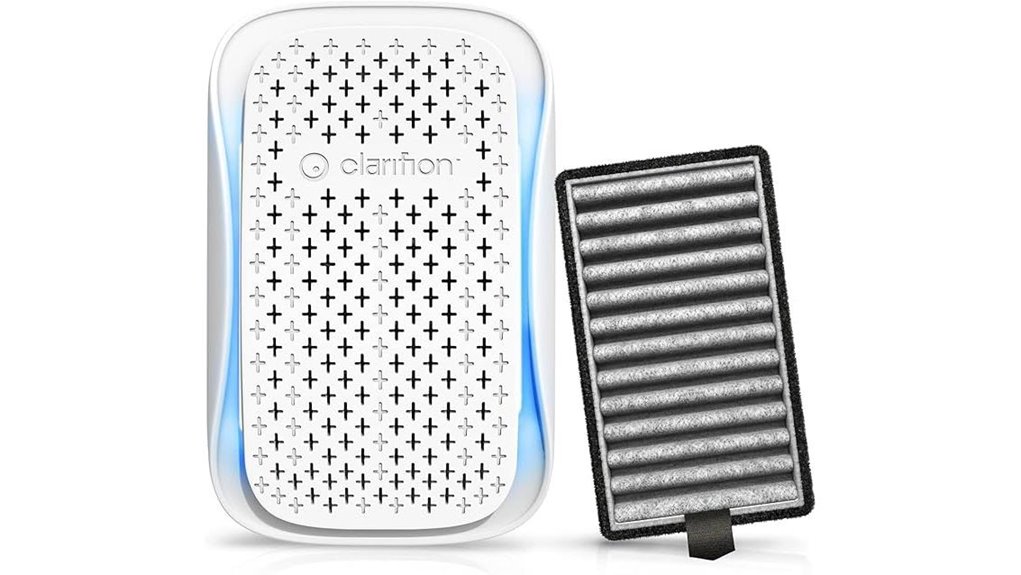
The Clarifion DSTx Portable Air Purifier with Ionizer is a strong pick for hotel rooms thanks to its compact, plug-in design and whisper-quiet operation. You’ll get a plug-in air ionizer with a HEPA filter, combining a negative ionizer with filtration to reduce dust, smoke, pet dander, and odors. Place it near windows or doors for best results, in bedrooms, living spaces, or baths. The dual-speed fan lets you adjust purification without noise, while the activated carbon layer targets odors alongside dust removal. CARB Certified and ozone-safe, it’s portable, suitable for multiple rooms, and fits pet households seeking cleaner air.
Best For: Hotel rooms or small living spaces needing compact, quiet air purification with odor control and ionization.
Pros:
- Compact, plug-in design suitable for desks, nightstands, or cabinets
- Whisper-quiet operation with dual-speed fan
- HEPA filtration plus activated carbon layer to reduce dust, odors, and smoke
Cons:
- May require placement near windows/doors for best results
- Ionizer feature may cause dust and allergens to settle instead of remain airborne
- Portable unit may not be sufficient for larger rooms or high-traffic spaces
Pure Air Mini Plug-in Air Purifier (2 Units)
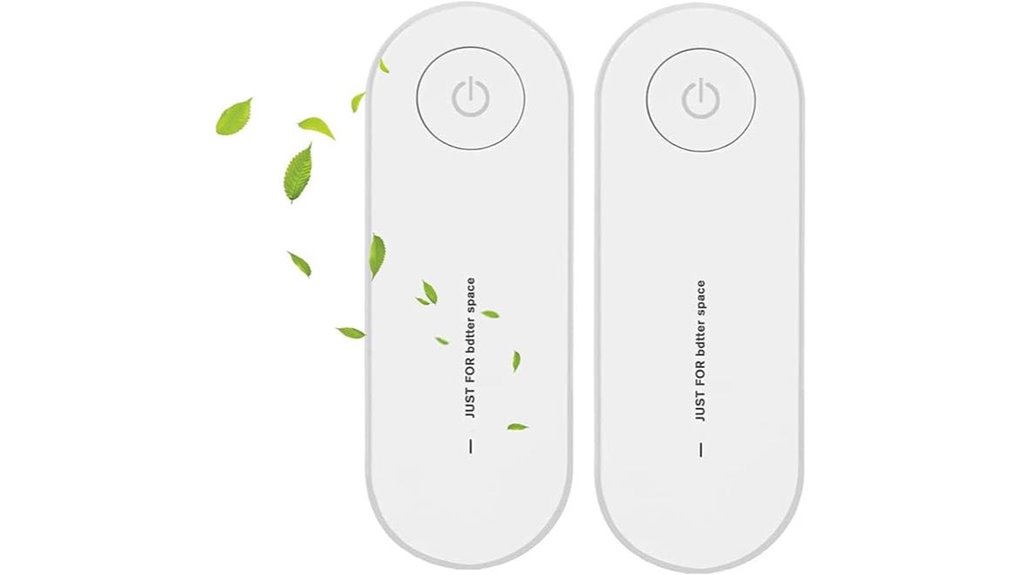
If you need compact, plug-in air purification for hotel rooms, Pure Air Mini (2 Units) stands out with its high-density negative ion output—up to 20 million per second—delivering a forest-like freshness in tight spaces. This duo fits anywhere: bedrooms, bathrooms, closets, hallways, and pet rooms, offering fast, chemical-free purification. It releases ions to intensify cleansing, delivering up to 10 times more negative ions across a 500-square-foot area. It’s plug-in and instant, with a low-loss design drawing ~1 watt, and it cycles 2 hours on, 10 minutes off to conserve energy. Experience improved air, reduced congestion, and continuous freshness.
Best For: hotel rooms, small apartments, and other tight indoor spaces needing quick, chemical-free air purification with compact plug-in operation.
Pros:
- High-density negative ion output (up to 20 million per second) for faster air cleansing
- Compact, plug-in design suitable for bedrooms, bathrooms, closets, hallways, and similar spaces
- Low energy usage (~1 watt) with 2 hours on / 10 minutes off cycling to conserve power
Cons:
- May require multiple units for larger areas beyond 500 square feet
- Relies on ionization rather than filtration, which may not suit all sensitivities or allergen needs
- Continuous ion emission could raise concerns for individuals sensitive to ionization or electronics interference
LabCharge Compact Air Purifier for Small Spaces
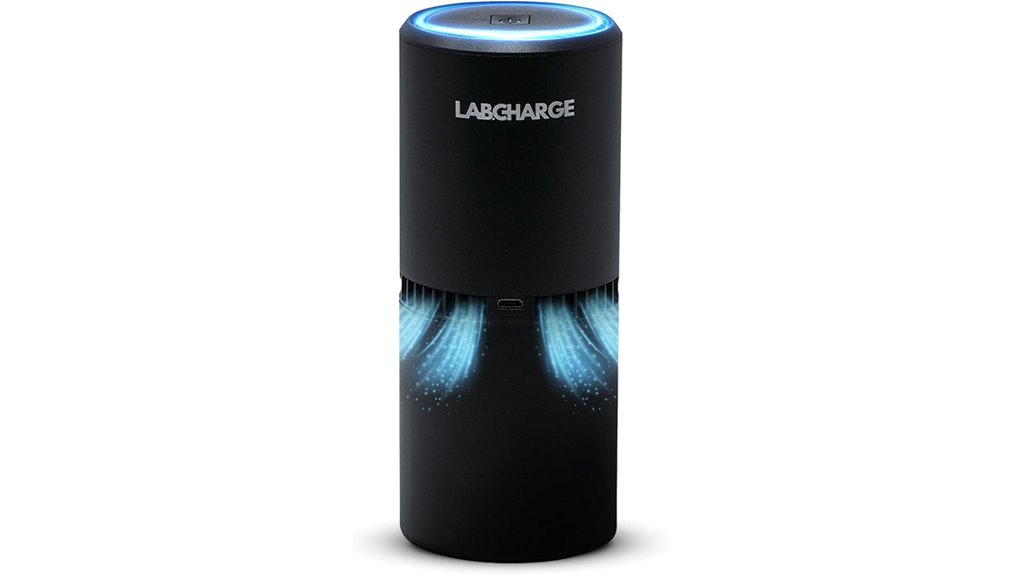
The LabCharge Compact Air Purifier stands out for its filter-free design, delivering maintenance-free performance in small hotel rooms. You’ll cover up to 250 sq ft, making it ideal for bedrooms, dorms, and compact spaces. With advanced ion technology, there are no bulky filters or costly replacements, and it runs on less than 1W for whisper-quiet operation. You’ll trap dust, smoke, cooking fumes, dander, and hair, boosting indoor air quality year-round. It’s portable for travel, fits cars, RVs, and hotels, and is a breeze to use—just plug in. LabCharge aims to clean air and sanitize surfaces with high-performance, home-ready design.
Best For: Bedtime-friendly, filter-free air purification in small spaces like bedrooms, dorm rooms, hotel rooms, and compact living areas where low power use and maintenance-free operation are preferred.
Pros:
- Filter-free design with maintenance-free operation and zero replacement costs
- Very low power consumption (less than 1W) and whisper-quiet performance
- Portable and travel-friendly, suitable for cars, RVs, and hotels
Cons:
- Limited to small spaces up to 250 sq ft; may not address larger rooms
- Ion technology may not remove all odor sources as effectively as some multi-stage purifiers
- No visible air quality readout or replaceable filter; users must trust performance without consumables
A1 Mini HEPA USB-C Air Purifier (White)
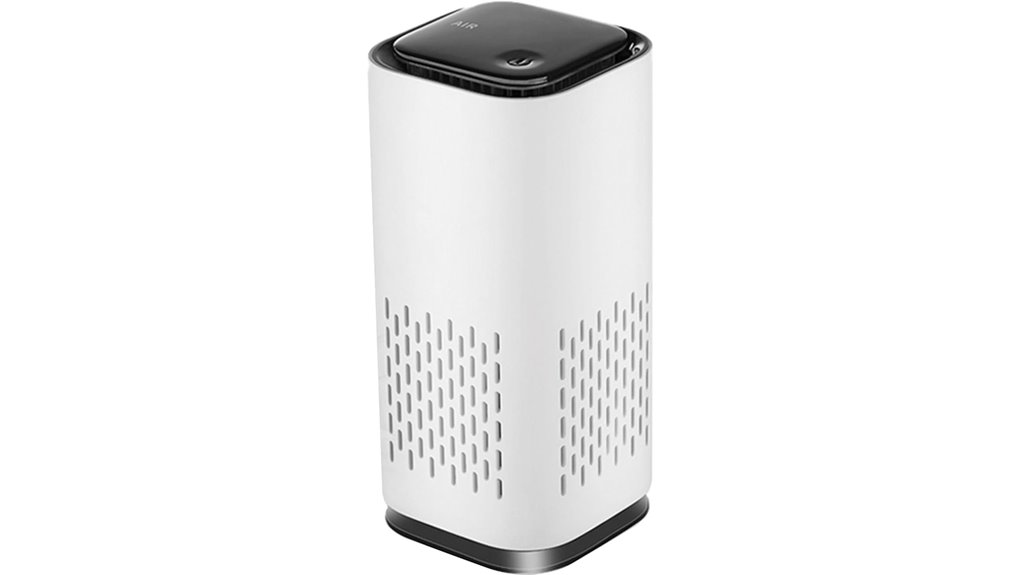
Ultra-compact and USB-C powered, the A1 2021 Mini HEPA USB-C Powered Air Purifier is ideal for travelers and bedside setups who need clean air without sacrificing space. You get authentic HEPA filtration that captures allergens, pollen, and pollutants, with coverage for small rooms up to 100 sq ft and a quick refresh time of about 30 minutes. It’s ultra-quiet at 18 dB, so it blends into your work or sleep. Use is simple: plug into USB-C, press ON/OFF, and enjoy indicator lights; press once more to hide lights at night, or power off. Lightweight and portable, it travels easily.
Best For: Travelers and bedside setups needing clean air in small spaces without sacrificing portability.
Pros:
- Ultra-compact and lightweight (5.2 inches tall, 6.7 oz) for easy travel and desk use
- Authentic HEPA filtration captures allergens, pollen, and pollutants
- USB-C powered for convenient, plug-in operation with quiet performance (18 dB)
Cons:
- Suitable coverage only for small rooms up to 100 sq ft; not ideal for larger spaces
- Requires USB-C power source; may need an available USB-C port or power bank
- Limited control features (basic ON/OFF and light visibility options) with no adjustable fan speed
Clarifion Air Ionizer for Home, Portable Filter
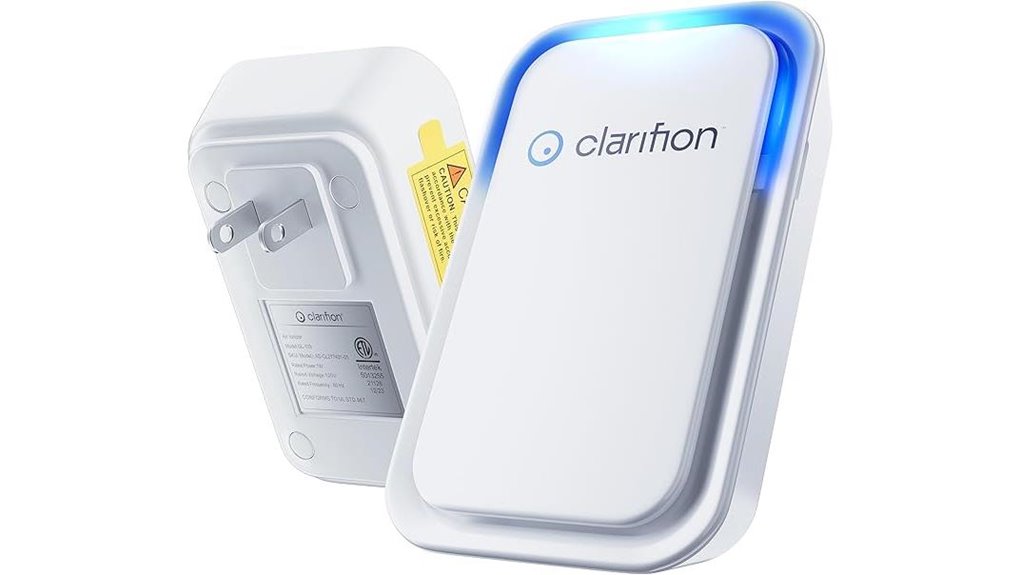
Looking for a budget-friendly, plug-in purifier? The Clarifion Air Ionizer for Home is a compact, portable filterless option that plugs into any standard outlet and uses negative ion technology. It suits every room, so place at least one in bedrooms, bathrooms, dining rooms, living rooms, and kitchens for broad coverage. With no air filters to replace, ongoing costs stay low, while negative ions target floating allergens like dust, dander, and pollen. It’s lightweight, easy to carry, and quietly supports better air quality. Simple setup minimizes bulky purifiers, delivering portable freshness across spaces you care about.
Best For: Budget-conscious shoppers seeking a lightweight, plug-in, filterless air improvement option for multiple rooms.
Pros:
- No replaced filters or ongoing maintenance costs
- Compact, portable design fits any standard outlet and space
- Quiet operation suitable for bedrooms and living areas
Cons:
- Uses negative ion technology, which may be less effective on heavy odors or very high pollution
- Not a replacement for true HEPA filtration in high-demand environments
- Effectiveness can vary based on room size and placement, requiring multiple units for broad coverage
Factors to Consider When Choosing Mini Purifier for Hotel Room
When you pick a mini purifier for a hotel room, start by matching it to the room size and checking the noise level, so it won’t disrupt your stay. Consider the filter type or a filter-free option for easy maintenance, and look at how you’ll power it in the room. Also weigh odor and dust control, since freshness and air quality can hinge on both performance and convenience.
Room Size Compatibility
How well a mini purifier fits a hotel room comes down to size, power, and noise. For hotel spaces, target purifiers that cover 100–250 sq ft to ensure effective air cleaning in typical guest areas. A compact, portable unit under 6 inches tall with low power usage (around 1–2 watts) helps maintain room aesthetics and energy efficiency in hotel settings. Units advertised as suitable for small rooms or bedrooms are generally appropriate for standard hotel rooms of average size. If a purifier claims to cover 250 sq ft, verify it maintains performance at room temperatures and typical occupancy levels to avoid undersizing. Consider models with quiet operation (around 18–30 dB) to preserve guest comfort and minimize disturbance.
Noise Level Consideration
For a hotel room, silence isn’t optional—it’s part of guest comfort. Look for a purifier with ultra-quiet operation, ideally around 18 dB, so it blends into the room without disturbing sleep. Prefer dual-speed or adjustable fan settings to balance purification effectiveness with noise during night and day. Choose compact, desk- or bedside-friendly units to minimize noise from vibration and airflow in small spaces. Verify that the unit’s noise performance stays low at both low and high fan speeds, preventing noticeable disturbances. Consider devices marketed as whisper-quiet or with silent modes to ensure minimal auditory disruption. In practice, test a model’s performance at night to confirm it stays unobtrusive while maintaining clean air.
Filter-Free Advantage
Could a filter-free mini purifier be the right fit for hotel rooms? Yes, if you want lower ongoing costs and simpler maintenance. Filter-free units avoid replacement fees and routine filter changes, offering a low or zero ongoing expense model. They rely on ionization or other non-filter tech to boost perceived air freshness, not standard HEPA media. Absence of filters means less downtime for replacements, which helps when staff access is limited. Maintenance stays simple: you mainly clean the unit and ensure a steady power source, without tracking filter life. Be aware performance varies; some models refresh air quickly, but they may not remove fine particulates as effectively as filter-based units. Choose based on dust levels, staff availability, and desired upkeep.
Power Source Availability
Power Source Availability: When choosing a mini purifier for a hotel room, consider how it gets powered and how that fits your space and staff workflow. USB-C powered models give you portable power options for rooms with limited wall outlets, helping you avoid outlet clutter. Plug-in units rely on standard outlets, delivering immediate operation without battery dependencies in hotel settings. Look for low-wattage designs around 1W or similar to minimize energy use during extended stays. Battery-free, plug-in options also reduce maintenance and replacement costs typical of battery-powered devices in hotels. Compact, USB-C or plug-in forms fit neatly on desks, nightstands, or small surfaces, simplifying placement. This choice supports quick deployment, easy replacement, and consistent performance across rooms.
Odor and Dust Control
Odor control and dust management should be a top priority when selecting a mini purifier for hotel rooms. Look for activated carbon filtration or odor-absorbing layers to reduce cooking, bathroom, and pet smells, while still removing dust and allergens. Negative ionizers can help dust settle faster, boosting perceived cleanliness in enclosed spaces, though you’ll want to balance with guest sensitivities. Choose smaller plug-in purifiers with quiet operation to minimize guest disruption. A purifier offering a rapid air refresh, such as a 30-minute quick cycle, helps mitigate odors from new room scents or previous occupants. Opt for maintenance-free or low-maintenance designs, like filterless or carbon-adsorbing media, to control ongoing costs while addressing odor concerns effectively.
Portability And Placement
Choosing a mini purifier that’s easy to place and move around matters for hotel rooms. Opt for a compact model that fits on a nightstand or small desk, emphasizing portable or mini designs. Favor plug-in or USB-C powered units to avoid bulky adapters and keep placement near outlets simple. Look for whisper-quiet operation—roughly 18 dB—so bedside noise stays minimal. Think dual-placement options, such as near windows or doors, to boost airflow flexibility and accommodate room layouts. A small footprint and light weight—under a few pounds—make it easy to transport between rooms or across stays. Prioritize clear indicators for power and status so you can relocate without guesswork, and choose shapes that don’t obstruct curtains or lamps. These considerations streamline setup and daily use.
Ionizer Effectiveness
Ionizers can boost a mini purifier’s effectiveness in hotel rooms, but their value depends on your room size and how they’re paired with filters. You’ll get better results when the unit releases millions of negative ions per second to help particles clump together, making filtration easier for HEPA and activated carbon stages. Remember, ionizer power matters: larger rooms need higher ion production to maintain air ionization levels and perceived freshness. In practice, pair the ionizer with a capable filter to capture settled particles and odors after ionization. Check for models that are CARB certified and stay within federal ozone limits for safe hotel-room use. Consider room dimensions and correlate ion output with your purifier’s filter efficiency to optimize performance.
Maintenance Frequency
Maintenance frequency hinges on your purifier type and hotel room dynamics. If you choose filterless models or ones with long-lasting filters, you reduce maintenance because replacements aren’t needed as often in a hotel room. Plug-in mini purifiers with no ongoing filter costs typically require minimal upkeep, which is ideal for daily turnover. Ionizing-only devices (negative ionizers) generally need little to no routine maintenance beyond occasional cleaning, simplifying your planning. Purifiers with replaceable carbon or HEPA filters demand scheduled replacements, so maintenance frequency scales with usage level and room occupancy. Devices advertised as “zero maintenance” or “filter-free” offer the lowest ongoing burden for hotel room use, making them strong candidates for rooms that prioritize turnover speed and minimal service time. Choose accordingly.
Common Questions
Do Mini Purifiers Remove Odors From Hotel Rooms Effectively?
Yes, mini purifiers can remove odors, though effectiveness varies by model and odor type. If you’re dealing with cooking or smoke smells, look for activated carbon filters and a strong CADR for air cleaning. Run the unit on high when odors are noticeable, and keep doors or vents open to improve circulation. Replace filters per the manufacturer’s schedule, and you’ll notice fresher air in your hotel room faster. Consider portable units with washable pre-filters for best results.
How Often Should We Replace Filters in Compact Purifiers?
Should you replace filters every 6 to 12 months? You should, depending on usage and the purifier’s indicator. Check the filter type—HEPA or carbon often lasts longer than standard pre-filters. If you have pets or smokers nearby, replace sooner. Monitor the device’s indicator; don’t wait for a drop in performance. For compact models, plan annual replacements, with mid-year checks, and keep spare filters on hand to maintain optimal airflow and efficiency.
Are Ionizers Safe for Guests With Respiratory Issues?
Ionizers can be risky for guests with respiratory issues, especially those with asthma or allergies. They may release ozone or fine particles that irritate sensitive lungs. If you’re considering one, prioritize models with certified low ozone emissions and integrated HEPA filtration. Prefer devices that operate with caution in occupied spaces, or offer medication-free alternatives like portable HEPA purifiers. Always inform guests about any potential risks and provide options for their comfort and safety.
Can USB-C Purifiers Run on Hotel Room Power Layouts?
Yes, USB-C purifiers can run on hotel room power setups, but you’ll need an adapter or hub if the outlet isn’t USB-C. Check the purifier’s power specs and amperage needs, then avoid daisy-chaining multiple devices. Use a dedicated USB-C wall charger or a portable power bank with pass-through charging for reliability. Keep cables tidy to prevent tripping, and test before guests arrive. Prioritize safety and regulatory guidelines to protect everyone.
Do These Units Produce Noticeable Fan Noise During Sleep?
They’re mostly quiet enough to sleep through. If you’re sensitive, you’ll notice a soft hum or breeze from the fan, but it won’t disrupt dreams. Many units let you adjust fan speed or use a sleep mode that minimizes noise. Look for compressors with built-in quiet designs and vibration dampening. In practice, you’ll likely hear a gentle white noise, not a wake-up-worthy roar.
All Together
You’ll likely sigh with relief knowing these mini purifiers fit snugly into hotel life. If you’re sensitive to odors, go filter-free options for a quick refresh; if you crave quiet nights, the whisper-quiet models are worth a nod. When in doubt, consider size, power, and USB or plug-in vibes to match your stay. In small spaces, a smart choice keeps air fresh without fuss, so you can focus on your trip.